Is My Family's Homophobia Abusive? Understanding Abuse From Homophobic Family
As an LGBTQ+ therapist in Minneapolis, I've worked with clients who struggle with a confusing question: "I know my family is homophobic, but is it abuse?” When homophobic parents say hurtful things or reject parts of you, it can be hard to name whether what you're experiencing crosses into identity abuse/homophobic abuse.
You might find yourself minimizing their behavior. Maybe you think "They're just from a different generation," or "Well, they’ve never kicked me out." But here's what I want you to know: just because something could be worse doesn't mean what you're experiencing isn't harmful or even abusive.
Research shows us that family rejection and homophobia have serious mental health consequences for LGBTQ+ people. A study by Scheer et al. (2019) found that LGBTQ+ individuals who experienced family rejection were at significantly higher risk for depression, anxiety, and suicidal ideation. Your family's homophobia isn't just "uncomfortable,” it can genuinely damage your wellbeing.
Let's explore what homophobia is, when it becomes abusive, and how to assess what's happening in your own family.
What is Homophobia?
Homophobia is prejudice, fear, or hatred directed at people who are lesbian, gay, bisexual, or otherwise attracted to the same gender. It shows up in many forms interpersonally and systemically. It can be subtle microaggressions or overt discrimination and violence.
In families, homophobia might look like:
Making disapproving comments about LGBTQ+ people in general.
Avoiding conversations about your identity or relationships.
Expressing discomfort when you mention anything LGBTQ+ related.
Believing that being LGBTQ+ is wrong, sinful, or a choice.
Refusing to acknowledge your partner or treating them differently than other family members' partners.
Not all homophobia is abusive. Sometimes family members are ignorant or struggling with their own biases, but they're not using their homophobia to control or harm you. The distinction between homophobia and homophobic abuse comes down to power and control.
What is Homophobic Abuse?
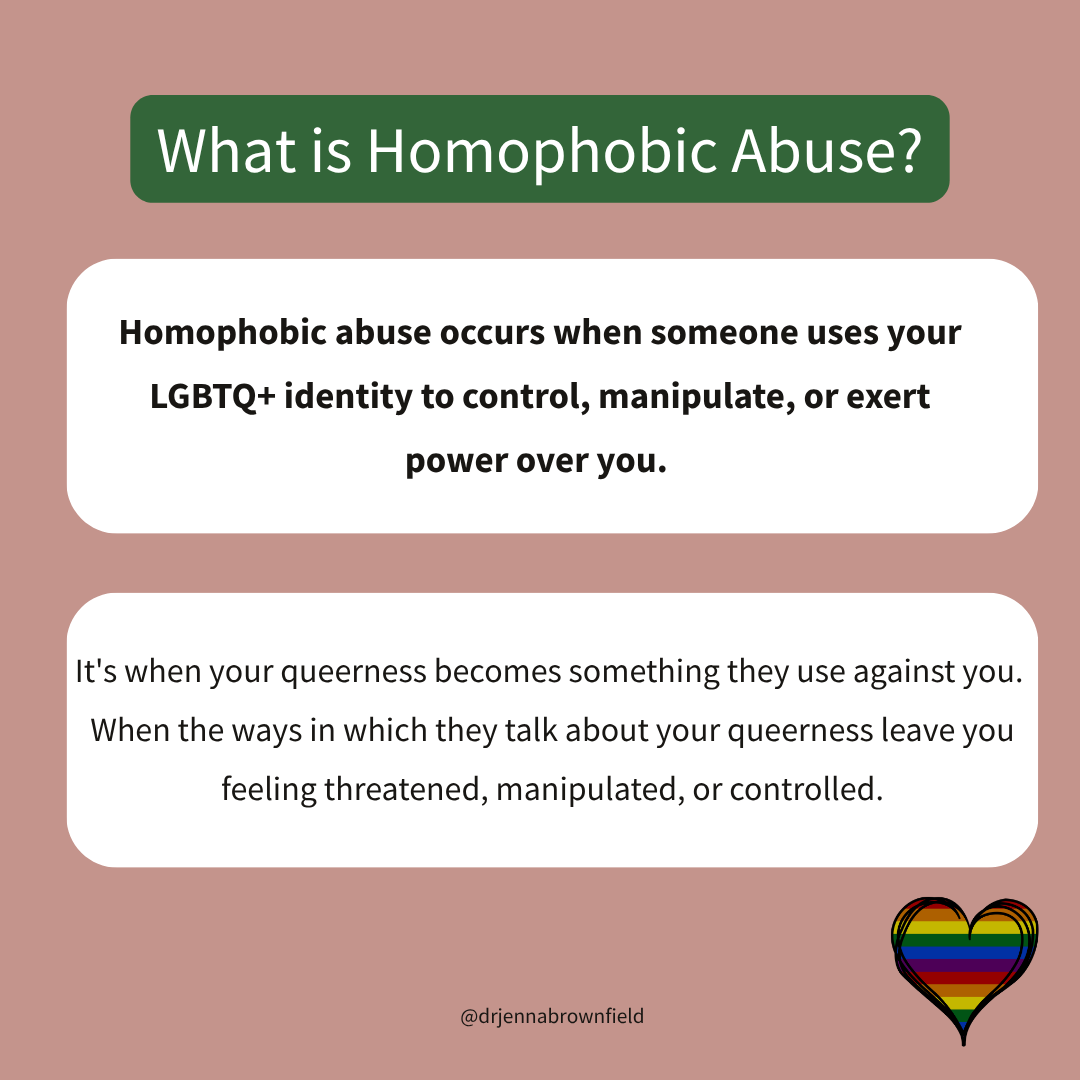
Homophobic abuse occurs when someone uses your LGBTQ+ identity to control, manipulate, or exert power over you. It's when your queerness becomes something they use against you. When the ways in which they talk about your queerness leave you feeling threatened, manipulated, or controlled.
This type of abuse is particularly insidious because it targets a core part of who you are. When your family uses your identity as a tool to hurt you, it can shake your sense of self. It makes you question whether you deserve love and acceptance.
Common Examples of Homophobic Abuse Include:
-
Using slurs, pejorative names, or derogatory language about your LGBTQ+ identity. They say these things to insult, embarrass, or control you. This might sound like calling you names, making cruel jokes at your expense, or using homophobic slurs.
-
Threatening to out you to others, cut you off financially, or remove you from their Will unless you hide your identity or change your behavior. This is using their power in the family or financial power as leverage to get what they want from you.
-
Forbidding you from seeing LGBTQ+ friends, attending Pride events, or accessing LGBTQ+ community. Monitoring your phone or social media to police who you're talking to or what LGBTQ+ content you're consuming.
-
Telling you that your identity is killing them, causing them shame, or ruining the family. Making you responsible for their emotional reactions to your queerness. Using guilt to make you hide who you are or change your behavior.
-
Pressuring or coercing you into conversion "therapy," religious interventions, or other attempts to change your sexual orientation. This is abuse, full stop.
-
Repeatedly telling you that you're confused, going through a phase, or that you don't really know yourself. Denying your experiences of homophobia and making you question your own reality.
-
Telling you they'll only love you or support you if you hide your identity, don't bring your partner around, or pretend to be straight. Making their affection contingent on you denying who you are.
-
Physical assaults, kicking you out of the house, or any form of violence connected to your LGBTQ+ identity. Sexual assault can also be a form of homophobic abuse, particularly when perpetrators target LGBTQ+ people because of their identity.
The key element in all of these examples is that your family is using your queerness as a target to control, hurt, or manipulate you. It's not just that they disapprove, they're actively wielding their power and control against you.
Self-Assessment: Is Your Family's Homophobia Abusive?
It can be hard to assess your own situation, especially when you love your family and don't want to believe they're being abusive. Here are some questions to help you reflect on whether your family's behavior crosses into abuse:
Questions About Power and Control:
Do your family members use your LGBTQ+ identity to threaten you or get you to do what they want?
Do they make you feel like you have to earn their love by hiding who you are?
Do they control who you can spend time with or what you can talk about based on your queerness?
Do they threaten to out you or use your identity to embarrass or punish you?
Do you feel like you're walking on eggshells around them, constantly monitoring what you say or do to avoid their anger?
Questions About Your Wellbeing:
Does interacting with your family leave you feeling worthless, ashamed, or feeling fundamentally broken?
Do you find yourself constantly questioning whether you're "too sensitive" about their homophobia?
Have their comments or behaviors made you feel unsafe, either emotionally or physically?
Do you spend significant mental energy managing their reactions to your identity?
Has their treatment of you contributed to depression, anxiety, or thoughts of self-harm?
Questions About Boundaries:
When you've asked them to stop certain behaviors, do they escalate or retaliate?
Do they respect your boundaries, or do they violate them and then blame you for being "too sensitive"?
Are you able to say no to them without fear of punishment or consequences?
If you answered yes to several of these questions, what you're experiencing may be abusive. Trust your gut. If it feels abusive, it may be, or at the very least, it's causing you significant harm.
Homophobia vs. Homophobic Abuse FAQs
-
No, not all homophobia is abuse. Homophobia becomes abuse when it's used as a tool to control, manipulate, or harm you.
For example, if your parent makes an ignorant comment about LGBTQ+ people because they don't understand, that's homophobia. It's hurtful, and it's something they need to work on. But if your parent repeatedly calls you slurs, threatens to kick you out if you don't hide your identity, or uses your queerness to manipulate you, that's homophobic abuse.
The distinction matters because it helps you understand what you're dealing with and what kind of support you need. Both homophobia and abuse are harmful, but they require different approaches.
-
If your family is abusive the biggest priority is to establish your safety. Are there ways, even small steps, you can take that will make you safer.
For example, can you start spending less time with your family? Can you start saving more or earning more if you’re financially dependent on your family?
Look at the resources listed below for additional support.
-
If your family's homophobia isn't abusive but is still causing you pain, there are steps you can take:
Set boundaries. You can limit conversations about LGBTQ+ topics or leave situations where homophobic comments are being made.
Educate when you have capacity. If you feel safe and have the energy, you can help educate your family. But remember: this is not your responsibility.
Build your support system. Connect with chosen family and LGBTQ+ affirming friends who celebrate you.
Consider family therapy. If your family is open to it, working with an LGBTQ+ affirming family therapist can help improve communication and understanding.
Take care of yourself. Use resources like my Survival Guide for Coping with Homophobic/Transphobic Family to develop coping strategies.
Work with a therapist. A LGBTQ+ affirming therapist can help you process the pain of your family's homophobia and develop strategies for protecting your mental health.
Remember, you don't have to tolerate homophobia just because it's not abusive. You deserve better than homophobia, period.
Resources
If you're experiencing homophobic abuse or need support:
LGBTQ+ Affirming Therapy: Working with a therapist who understands homophobic family dynamics can be life-changing. Look for therapists who specialize in LGBTQ+ issues and family trauma.
Local Minnesota Resources:
OutFront Minnesota Anti-Violence Program - Support for LGBTQ+ people experiencing violence or abuse
Minnesota LGBTQ+ Therapists' Network - Find affirming therapists who understand homophobic family dynamics
National LGBTQ+ Hotlines:
The Trevor Project - 1-866-488-7386 (24/7 crisis support for LGBTQ+ young people)
Trans Lifeline - 1-877-565-8860 (peer support hotline for trans people)
Closing Thoughts on Homophobic Abuse
Naming abuse is hard, especially when it comes from family. You might feel guilty for using the word "abuse" or worry that you're being dramatic. But here's the truth: if your family is using your LGBTQ+ identity to control, hurt, or manipulate you, that is abuse. You're not exaggerating. You're not being too sensitive. You're recognizing a painful reality.
Whatever you're experiencing, whether it's homophobia that hurts or homophobic abuse, you deserve support. You deserve to be celebrated for who you are, not punished for it. And you deserve relationships where your queerness is honored, not weaponized against you.
If you're struggling with homophobic family members and need support, I'm here. As a bi/queer therapist in Minneapolis, I provide online therapy for LGBTQ+ people throughout Minnesota and 40+ Psypact States. I specialize in helping clients navigate painful family dynamics, heal from family trauma, and build lives where they feel supported in their queer identities.
Ready to start healing from your family's homophobia?
Reach out for a free consultation. You don't have to do this alone.
Not ready for therapy, but still looking for help coping with your homophobic family? Grab my free guide below:
