LGBTQ+ Mental Health Blog
Resources to help you thrive as a LGBTQ+ person.

Online Gender Therapy: How it Works and Best Options
Thinking about online gender therapy? Learn how it works, what goals you can work toward, and how to find a gender-affirming therapist who truly gets it.
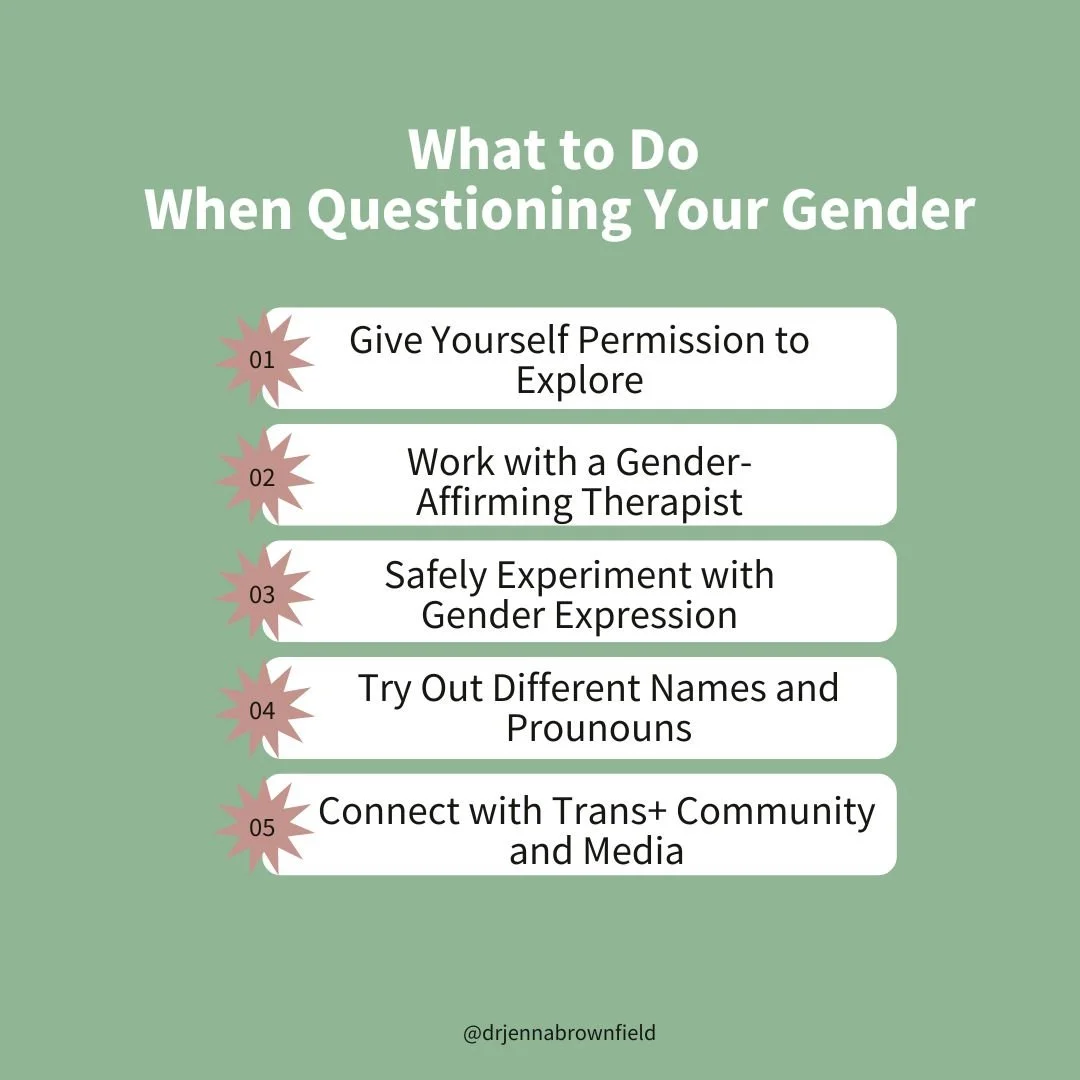
Questioning Your Gender: How to Safely Explore Your Identity
Questioning your gender is valid. This guide covers what to do when gender questioning, reflection questions to explore your identity, and how to tell others. You don't have to figure it out alone. You can work with a gender affirming therapist in Minneapolis to explore safely.
What to Expect in Your First Gender-Affirming Therapy Session
Walking into your first gender-affirming therapy session can bring a mix of curiosity, hope, and nervousness. That’s completely normal. This first appointment isn’t about having everything figured out. It’s about being met with respect, curiosity, and care.
In this post, we’ll walk through what typically happens in your first gender-affirming therapy session, what questions may come up, what to look for in a therapist, and how therapy can become a supportive space for exploration, healing, and self-understanding.

How to Respond When Family Members Continue to Deadname or Misgender You
When family members keep misgendering or deadnaming you, the pain runs deep. You’ve explained. You’ve reminded. You’ve been patient. Still, it keeps happening and it hurts like hell.
Being trans or nonbinary in a family that struggles to catch up shouldn’t mean you have to shrink yourself just to keep the peace. Whether you’re navigating casual slip-ups or transphobic family members, let’s look at how you can respond and how you can take care of yourself.

HRT Emotional Changes: What to Expect
Starting HRT? A Minneapolis gender therapist shares 3 common mental shifts trans folks experience during this life-changing step.

Transgender Partner Support: 5 Ways to Show Up With Care
Many trans people are feeling the stress and fear of what the future holds in regards to trans hostility and access to gender-affirming care. With our current political landscape and the increasing number of anti-trans legislation, it’s now more important than ever to support your trans partner, friends, and loved ones.

What is a Gender Therapist? And How to Find One
A gender therapist is someone who specializes in supporting trans+ people with their mental health, helps you explore gender identity in affirming ways, and may even be able to write letters of support for gender-affirming medical and surgical care.

4 Ways Therapy Helps You Cope with Transphobic Parents and Family
You don’t have to be alone in dealing with transphobic parents and family. Gender-affirming therapy or working with a trans-specialized therapist can help you cope with having transphobic parents.

Trans joy as resistance: Four types of happiness felt by trans and nonbinary people
Instead of solely thinking about trans mental health in terms of gender dysphoria, pain, and struggle, we also need to look at gender euphoria, joy, and what it means to thrive in life as a trans person. In a society that attacks trans and nonbinary people for simply existing, experiencing happiness and joy as a trans or nonbinary person can be a way to reclaim power.